
Writings, Letters & Speeches

Pioneering Research That Informed India’s Constitutional Vision
Ambedkar’s major research papers
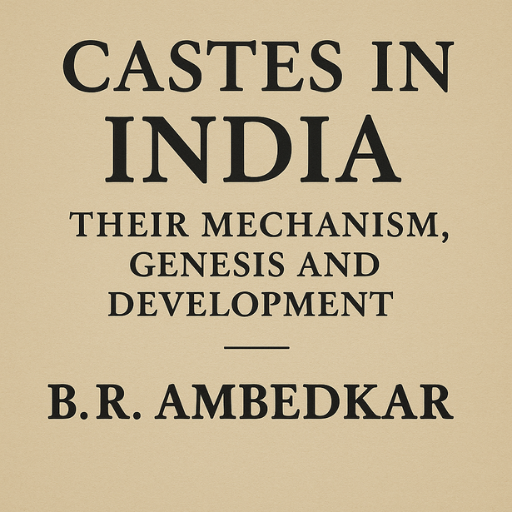
Their Mechanism, Genesis and Development (1916)
Ambedkar’s first academic paper, presented at Columbia University, explaining the origins and evolution of the caste system.
Small Holdings in India and Their Remedies (1918)
A detailed economic study analyzing land fragmentation and proposing structural agricultural reforms.
The Problem of the Rupee: Its Origin and Its Solution (1923)
A landmark work on Indian monetary policy, later foundational for the Reserve Bank of India.
Provincial Decentralisation of Imperial Finance in India (1925)
A review of public finance administration and suggestions for more balanced fiscal federalism.
The Evolution of Provincial Finance in British India (1925)
A research paper examining budgetary powers, financial allocation, and administrative accountability.
Report on the Working of the Indian Factory Act
A study advocating improved labor welfare, working hours regulation, and safety standards.
A rare window into Dr. B.R. Ambedkar’s thinking, voice, and work process
Letters, Notes & Drafts
The Letters, Notes & Drafts section presents an invaluable collection of Dr. B.R. Ambedkar’s handwritten letters, personal notes, policy drafts, and manuscript pages. These documents reveal the depth of his intellect, the precision of his writing, and the clarity with which he approached social, political, and constitutional issues. This archive allows readers, researchers, and students to witness how Ambedkar developed his ideas—often through meticulous notes, detailed annotations, and multiple drafts before delivering formal speeches or publishing major works.

Personal & Professional Letters
Letters exchanged with leaders, scholars, and communities that showcase Ambedkar’s intellect and advocacy.

Handwritten Notes & Annotations
A rare collection of Ambedkar’s notebooks, marginal notes, and handwritten thoughts on social and constitutional issues.

Drafts of Articles,
Speeches & Policy
Early drafts that reveal Ambedkar’s rigorous process of shaping arguments, refining ideas, and building powerful writings.
Dr. Ambedkar’s powerful interventions in Parliament on equality, democracy, and justice.
Parliamentary Speeches
The making of the constitution
Dr. B.R. Ambedkar’s speeches represent some of the most profound and enduring intellectual contributions to the making of modern India. Delivered during the monumental period of constitution-making, in both houses of Parliament, and at national forums across the country, these speeches remain foundational texts of India’s democratic journey. They reveal Ambedkar’s unmatched command over constitutional law, his unwavering moral courage, and his deep commitment to the principles of justice, equality, and human dignity.
Across each debate and intervention, Ambedkar articulated a vision of India rooted in liberty and equality—insisting that democracy must not merely exist in theory, but must be lived in the everyday experiences of all citizens. His speeches clarified the purpose of fundamental rights, strengthened safeguards for marginalized communities, and established the ethical framework of constitutional morality that continues to guide the nation today.
In the Constituent Assembly, Ambedkar’s voice was central to shaping the architecture of the Republic. His explanations of parliamentary democracy, federal structure, minority rights, legal equality, and administrative reforms continue to serve as guiding principles for scholars, lawmakers, and courts. These debates stand as a testament to his brilliance, precision, and his ability to translate complex ideas into accessible and persuasive argument.
Beyond the Assembly, Ambedkar’s speeches in Parliament touched on some of the most critical issues of the time—economic development, labor welfare, gender equality, social reform, and the rights of historically oppressed communities. His arguments were grounded in evidence, driven by ethical clarity, and focused on building an India where dignity and opportunity were universal.
These Speeches Include:
• Defense of Fundamental Rights & Directive Principles
Ambedkar articulated the need for enforceable rights that protect citizens from state excesses, while also providing guiding principles for social and economic reform.
• Clarifications from the Drafting Committee
He addressed doubts and questions from members across the political spectrum, explaining the intent, structure, and legal reasoning behind each constitutional provision.
• Arguments for Constitutional Safeguards
Ambedkar advocated strongly for protections for marginalized communities, emphasizing representation, social justice, and the elimination of structural inequalities.
• His historic final speech: “Grammar of Anarchy”
Delivered on 25 November 1949, this speech warned the nation against abandoning constitutional methods for extra-constitutional means—an enduring message about the sanctity of democracy and rule of law.
Llegislative vision for a mordern India
As India’s first Law Minister and later as a Member of Parliament, Ambedkar delivered landmark speeches that addressed economic reform, labor rights, political democracy, social welfare, and women’s empowerment.
Ambedkar’s arguments were grounded in facts, guided by constitutional principles, and aimed at strengthening the democratic framework of the nation. He emphasized that true progress could not be achieved without safeguarding workers’ rights, empowering women, ensuring social equality, and creating state institutions capable of supporting inclusive development. His interventions continue to influence India’s legal and political systems, offering enduring guidance for modern policymaking.
Notable Themes Reflected in These Speeches
• Protection of Workers and Industrial Labor
Ambedkar strongly advocated for fair labor laws, humane working conditions, and economic security for workers, recognizing the labor force as a vital pillar of national growth.
• Social Legislation for Equality
He championed progressive laws aimed at dismantling caste-based discrimination, advancing civil liberties, and ensuring equal access to opportunities.
• Economic Planning and Progress
Ambedkar emphasized scientific economic planning, state responsibility in resource distribution, and long-term strategies for national development.
• Justice for Marginalized Communities
His commitment to the rights of Scheduled Castes, Scheduled Tribes, and other oppressed groups was reflected in his insistence on constitutional safeguards and equitable representation.
• Strengthening Institutions of Democracy
Ambedkar stressed the importance of constitutional morality, transparent governance, and strong democratic institutions capable of protecting individual rights and maintaining social harmony.
The voice of social transformation
Ambedkar’s public speeches—delivered at universities, conferences, and community gatherings—focused on education, caste inequality, human rights, and social change. These addresses mobilized millions and continue to inspire democratic movements across India.
Dr. B.R. Ambedkar’s public lectures and national addresses form one of the most powerful bodies of thought leadership in modern India. Delivered at universities, social conferences, community gatherings, and national platforms, these speeches were aimed not only at informing citizens but at transforming the social mindset of the country. Unlike the formal tone of parliamentary debates, Ambedkar’s public lectures were direct, accessible, and deeply inspirational—crafted to awaken consciousness among ordinary people and empower communities to demand their rights with dignity.
Through these speeches, Ambedkar emphasized that social reform, education, and democratic responsibility were essential pillars for building an equal and enlightened society. He spoke passionately about the need to dismantle caste hierarchy, embrace rational thinking, and uphold the moral foundations of democracy. His public addresses mobilized millions, giving voice to the voiceless and providing a roadmap for social transformation grounded in justice, liberty, and human rights.
Even today, these speeches continue to inspire movements for equality, education, and social reform across India, reminding citizens of their role in strengthening the nation’s democratic fabric.
Key Ideas Reflected in These Speeches
• Education as a Tool of Empowerment
Ambedkar urged individuals and communities to pursue education as the ultimate means of achieving equality, independence, and self-respect, famously stating that “education is the milk of a tigress.”
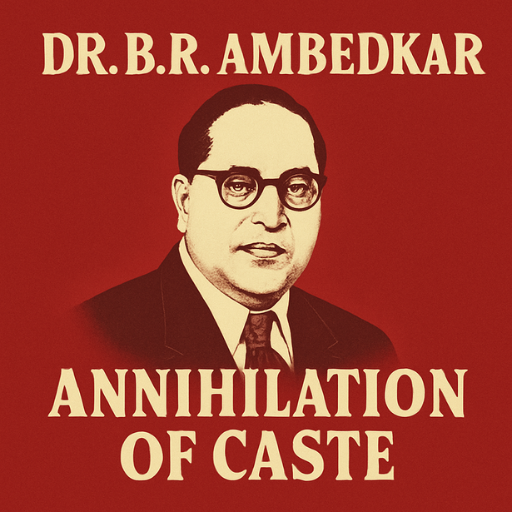
• Annihilation of Caste
He challenged the roots of caste inequality and asserted that no true democracy could exist in a society divided by birth, prejudice, and social hierarchy.
• Responsibilities of a Democratic Citizen
Ambedkar highlighted that democracy is a way of life—not merely a system of government. He emphasized the duty of citizens to uphold constitutional values and work toward social harmony.
• The Importance of Scientific Thinking
He encouraged society to adopt reason, rationality, and scientific temper, rejecting superstition and promoting intellectual inquiry as foundations for progress.
Historic Struggles Led by Ambedkar for Equality and Human Dignity
Justice Through Resistance
REFORM
1920s–1930s
Early Public Speeches — Voice of Social Reform
Historic speeches advocating equality, representation, and social empowerment.
Ambedkar’s early addresses focused on exposing caste oppression, demanding civil rights, and mobilizing marginalized communities toward political participation. These recordings reflect his growing national influence and early leadership in social justice movements.
CONSTITUENT
1946–1950
Constituent Assembly Debates — Nation Building in Voice
Foundational discussions shaping India’s constitutional identity and democratic structure.
These rare audio clips feature Ambedkar’s contributions to constitutional design, federal structure, safeguards for civil rights, and protection of minorities. The recordings highlight his precision in legal reasoning and vision for an equitable republic.
BROADCAST
1940s–1950s
Radio Broadcasts & Policy Announcements — Public Communication
Nationwide radio addresses and press recordings on governance, social equality, labour policy, and economic reform.
His broadcasts communicated policy rationale directly to citizens, making governance accessible and rooted in public interest.
ARCHIVAL
1930s–1956
Archival Film Footage — Historical Moments & Public Events
Documented visuals from public rallies, constitutional sessions, international missions, and Buddhist movement events.
These restored films bring historical moments to life—capturing processions, speeches, interactions with leaders, and landmark ceremonies including his conversion to Buddhism.
REFORM
1920s–1930s
Early Public Speeches — Voice of Social Reform
Historic speeches advocating equality, representation, and social empowerment.
Ambedkar’s early addresses focused on exposing caste oppression, demanding civil rights, and mobilizing marginalized communities toward political participation. These recordings reflect his growing national influence and early leadership in social justice movements.
CONSTITUENT
1946–1950
Constituent Assembly Debates — Nation Building in Voice
Foundational discussions shaping India’s constitutional identity and democratic structure.
These rare audio clips feature Ambedkar’s contributions to constitutional design, federal structure, safeguards for civil rights, and protection of minorities. The recordings highlight his precision in legal reasoning and vision for an equitable republic.
BROADCAST
1940s–1950s
Radio Broadcasts & Policy Announcements — Public Communication
Nationwide radio addresses and press recordings on governance, social equality, labour policy, and economic reform.
His broadcasts communicated policy rationale directly to citizens, making governance accessible and rooted in public interest.
ARCHIVAL
1930s–1956
Archival Film Footage — Historical Moments & Public Events
Documented visuals from public rallies, constitutional sessions, international missions, and Buddhist movement events.
These restored films bring historical moments to life—capturing processions, speeches, interactions with leaders, and landmark ceremonies including his conversion to Buddhism.