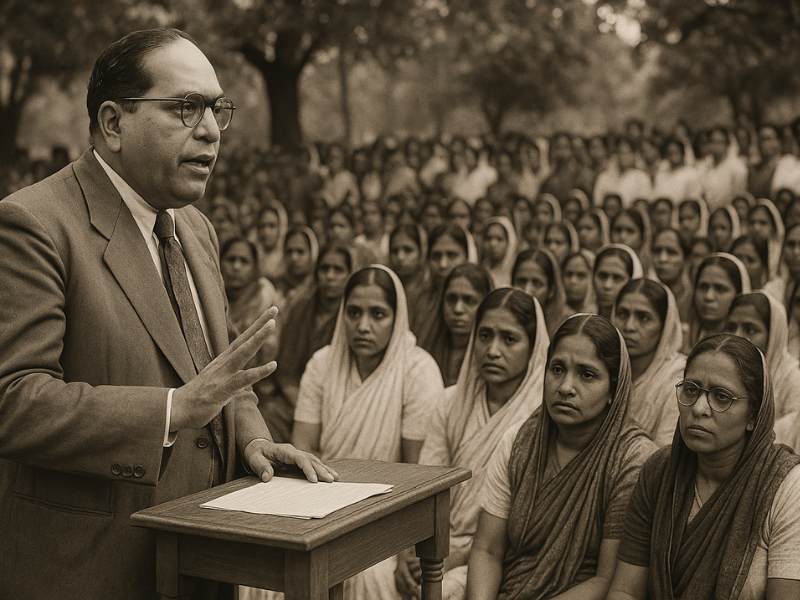
Historic Struggles Led by Ambedkar for Equality and Human Dignity
Justice Through Resistance
Mahad Satyagraha (1927)
Water Rights Protest
The Mahad Satyagraha marked one of Ambedkar’s earliest and most powerful civil rights movements, challenging the caste-based denial of access to public water resources. On 20 March 1927, Ambedkar led thousands of Dalits to drink water from the Chavdar Tank in Mahad, affirming their basic human right to public facilities. The movement symbolized the fight against untouchability and asserted that civil rights must be universal and unconditional. Mahad became a milestone that awakened national consciousness about caste discrimination and strengthened the movement for social equality.
Kalaram Temple Movement (1930)
Fight for Spiritual Equality
The Kalaram Temple Movement in Nashik was Ambedkar’s bold attempt to secure equal religious rights for Dalits. In 1930, he led a massive march demanding entry into the Kalaram Temple, which had long barred marginalized communities. The movement challenged the religious foundations of caste oppression and stated that spiritual dignity was as important as social and economic rights. Although entry was not immediately granted, the protest shook orthodox structures and became a turning point in the struggle for equality within Hindu religious spaces.
Defining the Future of Dalit Political Voice
Poona Pact (1932)
A historic agreement between Ambedkar and Gandhi redefining Dalit political representation through reserved seats.
The Poona Pact was a compromise between Dr. Ambedkar and Mahatma Gandhi in 1932. It replaced separate electorates with reserved seats for the Depressed Classes, increasing representation but reducing autonomy. The agreement shaped future debates on social justice, electoral rights, and democratic inclusion in India.
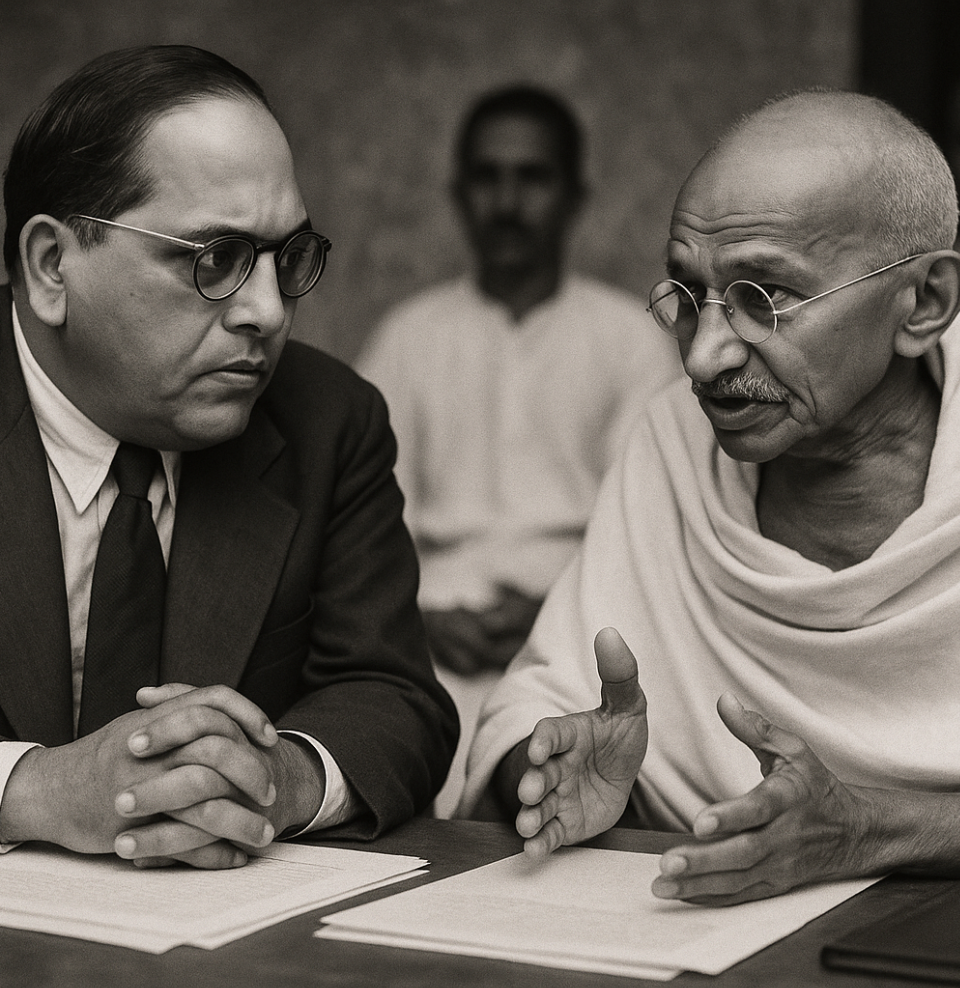
Negotiating Shared Futures
Negotiation with Mahatma Gandhi
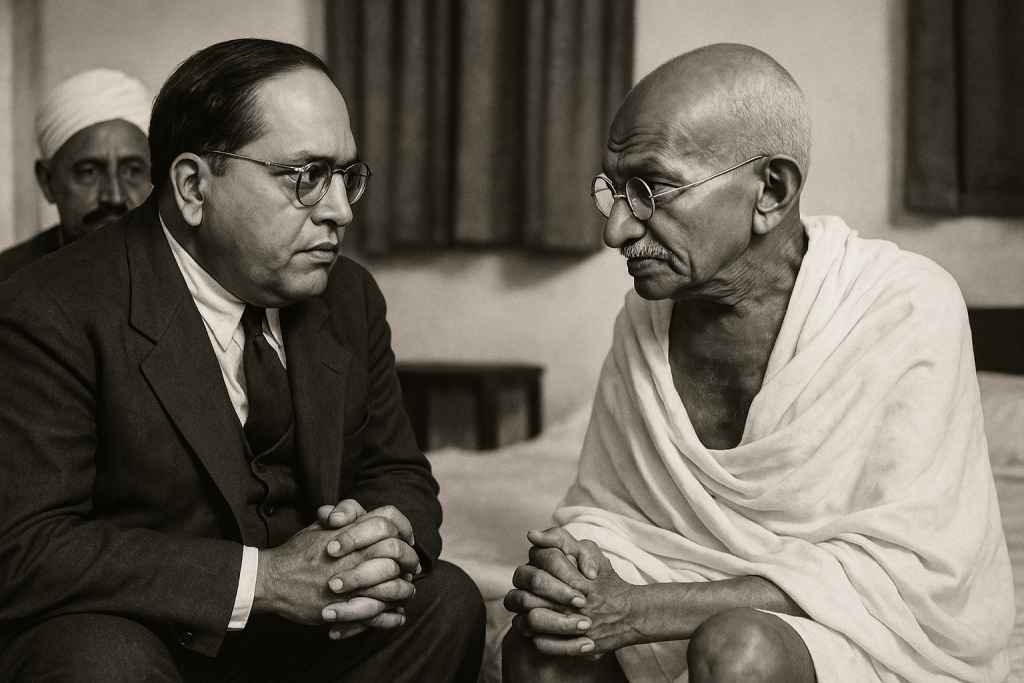
The Poona Pact emerged from intense negotiations between Dr. B.R. Ambedkar and Mahatma Gandhi during Gandhi’s fast at Yerwada Jail in September 1932. While Ambedkar had secured separate electorates for the Depressed Classes through the Communal Award, Gandhi opposed this provision, arguing that it would divide Hindu society. The discussions were emotionally charged yet historically significant, as both leaders represented two powerful but differing visions of social reform.
Rights and Representation
Debate on Representation
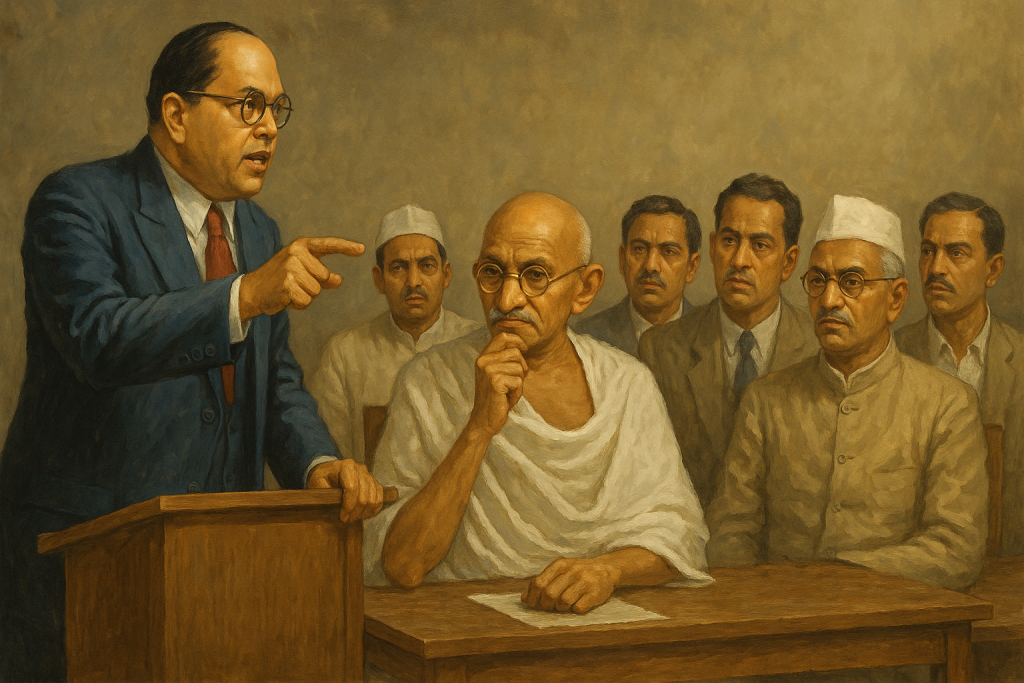
The Poona Pact sparked a deeper debate on the nature of political representation for historically oppressed communities. Ambedkar’s original demand for separate electorates stemmed from his conviction that Dalits needed an independent political voice free from upper-caste dominance. He believed that true democracy required structural safeguards, not symbolic inclusion, and argued that without autonomous representation, social justice would remain incomplete.
Strengthening the Fight for Equality
Dalit Rights Movement Building
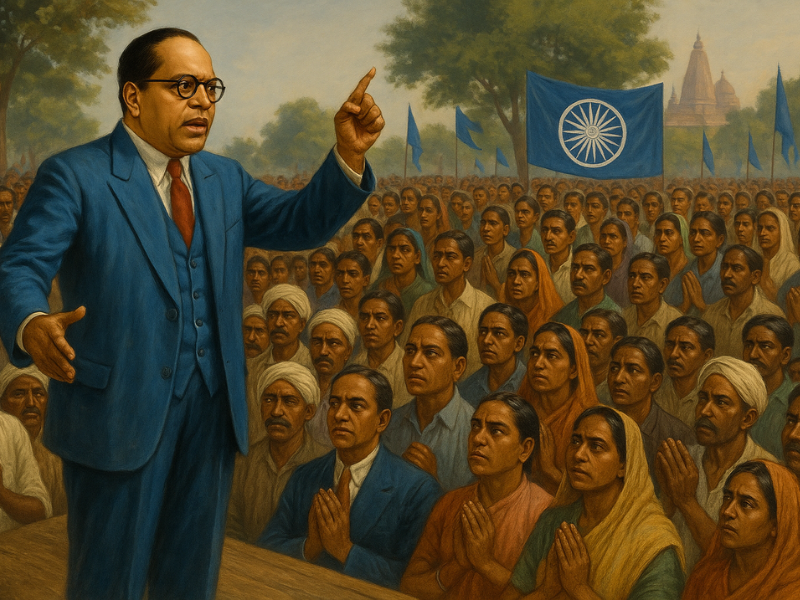
Dr. B.R. Ambedkar played a pivotal role in building a unified Dalit rights movement that challenged centuries of social exclusion, discrimination, and injustice. Through his speeches, writings, and mass mobilization efforts, he inspired oppressed communities to assert their dignity and demand equal treatment in public life. Ambedkar emphasized education, political representation, and social awareness as the key tools for empowerment, urging people to rise above imposed limitations and claim their rightful place in society.
Championing Equality for Women
Women’s Rights Advocacy
Dr. B.R. Ambedkar was one of the earliest and strongest advocates of women’s rights in modern India. He believed that the progress of a society could be measured by the status of its women, and therefore, women’s empowerment was central to his vision of social justice. Through his speeches, writings, and legislative efforts, Ambedkar consistently highlighted the need for gender equality in education, employment, property rights, and personal freedom. His leadership encouraged women from marginalized communities to break social barriers and participate actively in public life.