
Modern Relevance & Application
Examining Ambedkar’s Legacy in Contemporary Social Justice
Social Equality in Today’s India
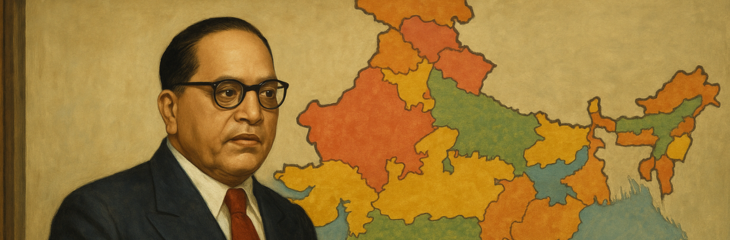
Social equality in today’s India continues to reflect the ongoing struggle against caste-based discrimination, economic disparity, and social exclusion. Ambedkar’s principles of liberty, equality, and fraternity remain central to modern debates on affirmative action, representation, and human rights.
Despite constitutional safeguards, marginalized communities still face limited access to education, healthcare, and social mobility. Movements across the country—led by students, activists, and civil society organizations—draw inspiration from Ambedkar’s vision to challenge injustice and demand institutional reforms.
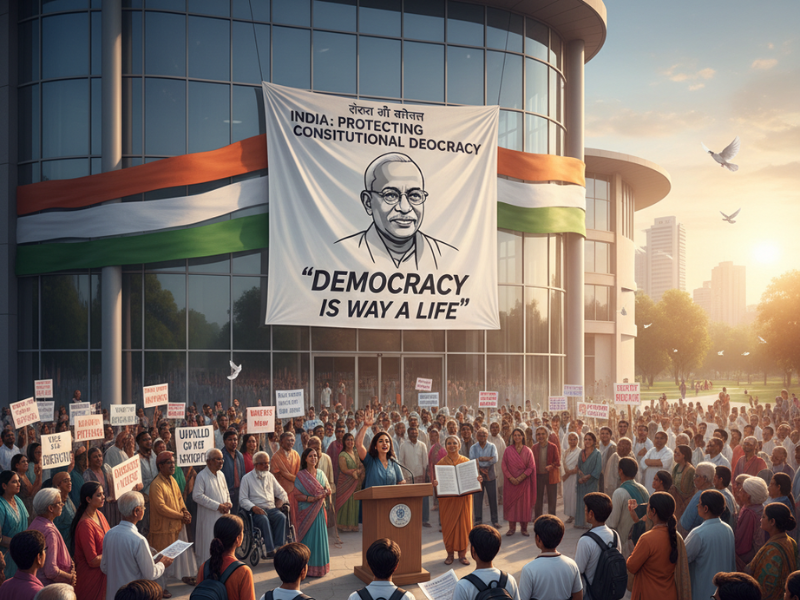
Safeguarding India’s Democratic Ideals Through Ambedkar’s Vision
Democracy & Constitution Protection
Protecting democracy and the Constitution has become one of the most urgent responsibilities in contemporary India. As the principal architect of the Indian Constitution, Dr. B.R. Ambedkar emphasized the need for constitutional morality, institutional integrity, and the continuous participation of citizens in democratic life. His warnings about majoritarianism, social inequality, and misuse of state power are more relevant today than ever.
In modern India, the protection of democratic structures demands active public engagement—through informed voting, defending civil liberties, supporting independent institutions, and resisting discrimination or authoritarian tendencies. Citizens, activists, scholars, and youth-led initiatives play a crucial role in monitoring rights violations, spreading constitutional awareness, and advocating for transparency and accountability.
A Blueprint for Inclusive and Just Economic Development
Economic Reforms Inspired by Ambedkar
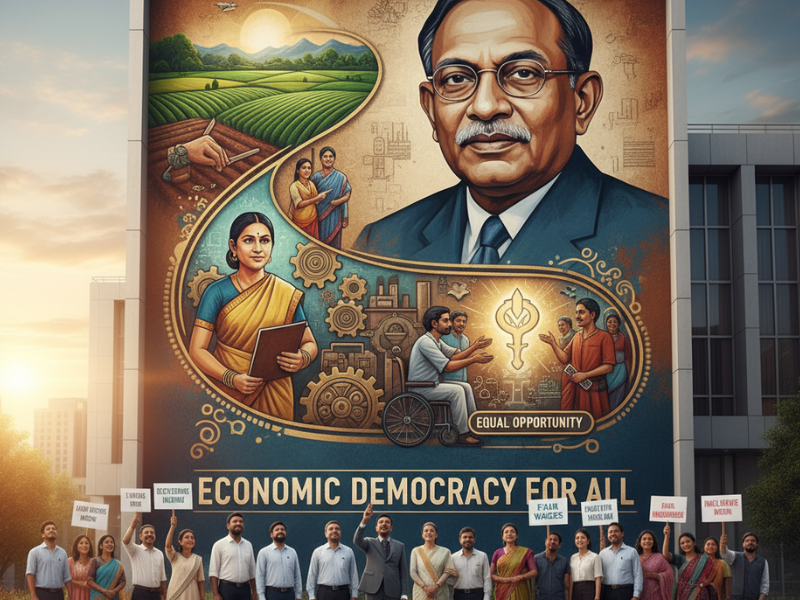
Dr. B.R. Ambedkar’s economic thought forms one of the most progressive and forward-looking frameworks in modern India. His proposals emphasized state responsibility, equal opportunity, land redistribution, and protection of marginalized communities—ideas that continue to influence economic reforms today. Ambedkar believed that political democracy could not survive without economic democracy, and argued for policies that ensure fair wages, labor rights, and social security.
Modern economic reforms inspired by Ambedkar aim to reduce inequality through targeted welfare programs, affirmative action, and inclusive financial systems. Initiatives like public sector expansion, social justice budgeting, cooperative movements, and rural industrial development resonate strongly with his vision. His emphasis on regulating private monopolies and safeguarding workers is reflected in contemporary debates on corporate accountability, job security, and equitable resource distribution.

Ambedkar’s Legacy in Worldwide Justice Movements
Human Rights & Global Social Movements
Dr. B.R. Ambedkar’s philosophy of equality, dignity, and human rights has transcended geographical boundaries and influenced global social justice movements. His lifelong struggle against caste oppression, economic exploitation, and social exclusion resonates deeply with marginalized communities around the world. From anti-discrimination campaigns in South Asia to civil rights dialogues in the West, Ambedkar’s ideas inspire activists seeking transformative change.
International human rights groups often draw upon his emphasis on constitutional morality, social democracy, and collective empowerment. Movements advocating for minority rights, gender equality, and anti-racism frequently reference Ambedkar’s teachings as a framework for resistance and reform. His critique of structural injustice aligns with global discussions on dismantling oppressive systems and building inclusive societies.