About Dr. B. R. Ambedkar

About Us

Early Life & Family Background

Childhood in Mhow

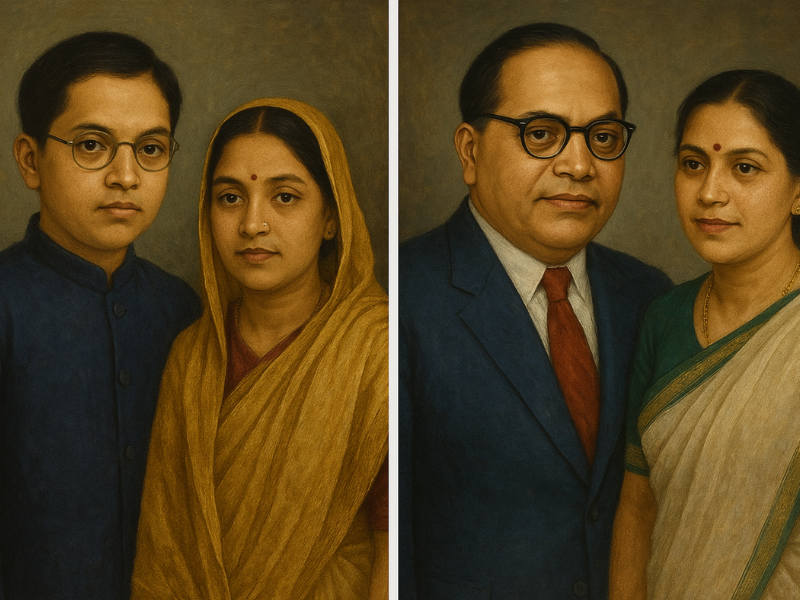
Dr. Bhimrao Ramji Ambedkar was born on April 14, 1891, in Mhow, a military cantonment in present-day Madhya Pradesh. His father, Ramji Maloji Sakpal, served in the Indian Army, and his mother, Bhimabai, nurtured in him values of honesty, discipline, and education. Though belonging to the Mahar community, considered “untouchable” at the time, his family placed great emphasis on learning and self-respect.

Ambedkar’s childhood was shaped by both intellectual curiosity and social discrimination. In school, he was made to sit separately, denied drinking water, and treated unequally. Yet, these humiliations only strengthened his resolve to rise through education. His father’s encouragement inspired him to see knowledge as the path to freedom.

The lessons Ambedkar learned in Mhow—of injustice, perseverance, and dignity—became the foundation of his lifelong mission to fight caste oppression and build a society based on equality and human rights.

Social Discrimination & Experiences

During his early schooling, Dr. B.R. Ambedkar faced severe social discrimination because of his caste. As a child from the Mahar community, he was treated as “untouchable” by teachers and classmates. He and other students of similar background were made to sit apart, denied drinking water, and excluded from classroom participation. These humiliating experiences left a lasting impression on his young mind. Despite the constant prejudice, Ambedkar displayed remarkable determination and intellectual strength. Instead of surrendering to societal barriers, he used education as his weapon of empowerment. His resilience and thirst for knowledge distinguished him even among his peers.

These painful experiences of untouchability and exclusion deeply influenced his later work. They awakened in him a lifelong mission to eradicate caste-based discrimination and establish a social order where dignity, equality, and justice were guaranteed for every individual.

Influence of Ramji Maloji Sakpal & Bhimabai

Dr. B.R. Ambedkar’s parents, Ramji Maloji Sakpal and Bhimabai, played a pivotal role in shaping his character and values. His father, a Subedar in the Indian Army, was a man of discipline, integrity, and deep respect for learning. Despite belonging to a marginalized community, Ramji firmly believed that education was the greatest weapon against social injustice and encouraged his children to study diligently.

Dr. B.R. Ambedkar’s parents, Ramji Maloji Sakpal and Bhimabai, played a pivotal role in shaping his character and values. His father, a Subedar in the Indian Army, was a man of discipline, integrity, and deep respect for learning. Despite belonging to a marginalized community, Ramji firmly believed that education was the greatest weapon against social injustice and encouraged his children to study diligently.

From Struggles to Scholarly Excellence

Education Journey

Dr. Ambedkar’s educational path reflects perseverance, breaking barriers through knowledge—from local schooling to earning global recognition at premier universities.

Elphinstone
College

Columbia
University

London School
of Economics

Gray’s Inn – Law
Studies

From Struggles to Scholarly Excellence

Education Journey

Dr. Ambedkar’s educational path reflects perseverance, breaking barriers through knowledge—from local schooling to earning global recognition at premier universities.

Columbia
University

London School
of Economics

Elphinstone
College

Gray’s Inn – Law
Studies

Strength, Compassion, and Discipline Beyond Public Life

Personal Life

Marriage with Ramabai Ambedkar

Dr. B.R. Ambedkar married Ramabai Ambedkar in 1906, when he was just fifteen years old. Ramabai came from a humble background and stood by Ambedkar through years of hardship, sacrifice, and financial struggle during his studies in India and abroad. Despite living in poverty, her unwavering support and patience gave Ambedkar emotional strength and stability. Her passing in 1935 deeply affected him, leaving behind a lasting sense of gratitude and devotion.

Marriage with Dr. Savita Ambedkar

In 1948, Ambedkar married Dr. Savita Ambedkar (née Kabirkar), a doctor by profession. She became his companion during the final phase of his life, caring for him as his health declined. Her presence brought renewed comfort and companionship, allowing him to focus on his work and writing in his later years.

A vision for a
brighter
tomorrow

The Principles That Guided Dr. Ambedkar’s Life and Leadership

Personal Values & Discipline

Dr. Ambedkar’s disciplined lifestyle, simplicity, and moral strength reflected his deep commitment to justice, education, and human equality.

Discipline in Action
80%
Commitment to Education
90%
Scroll to Top

Elphinstone College, Bombay

Dr. Ambedkar’s educational journey began at Elphinstone College, Bombay, where he broke caste barriers as one of the few Dalit students admitted. His determination and brilliance helped him complete his matriculation and graduation with distinction in 1912. This early success opened doors for higher education abroad, marking the first step in his pursuit of academic excellence.

Columbia University, New York (Ph.D. in Economics)

In 1913, Ambedkar received a scholarship from the Maharaja of Baroda to study at Columbia University. Under the mentorship of scholars like John Dewey, he completed his Ph.D. in Economics. His thesis focused on the causes of poverty and inequality in India, and his exposure to liberal democratic ideas profoundly influenced his vision for social and political reform.

London School of Economics (D.Sc.)

Continuing his studies in London, Ambedkar joined the London School of Economics, earning a Doctor of Science (D.Sc.) for his work on public finance and the Indian economy. His research reflected deep analytical insight into social justice through economic planning.

Gray’s Inn – Law Studies

Ambedkar simultaneously pursued law studies at Gray’s Inn, London, where he was trained in constitutional law and jurisprudence. This legal foundation later empowered him to draft the Indian Constitution, blending justice, equality, and democracy into India’s foundational framework.