



Architect of Modern India

Crafting the Framework of Independent India

Drafting of the Constitution

Role as Chairman, Drafting Committee

Architect of Modern India’s Constitution

Architect of Modern India’s Constitution

Guiding India’s Constitutional Vision Forward

Fundamental Rights
Framework

Crafting India’s Supreme Governing Document

Ensuring Fair Access and Representation

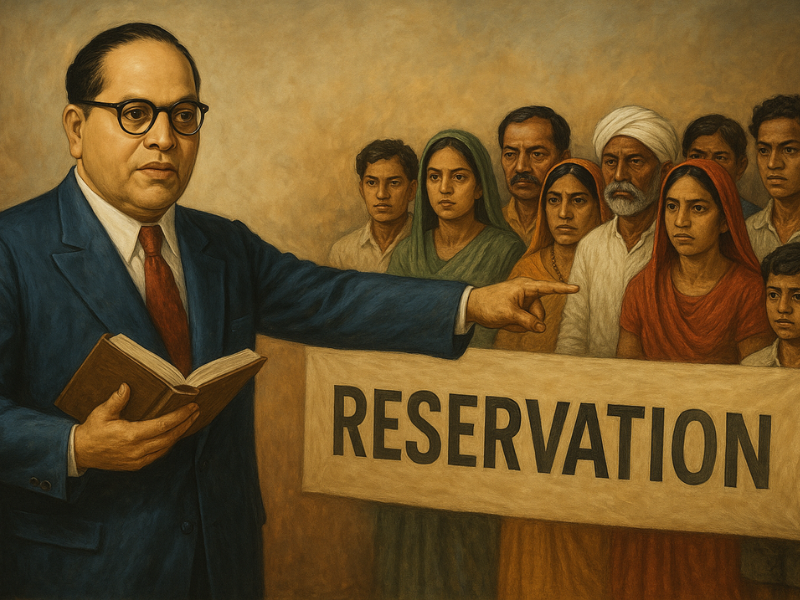
Reservation Policy for Social Justice

Dr. B.R. Ambedkar viewed reservation as a corrective mechanism to address centuries of structural discrimination and exclusion faced by marginalized communities. He argued that true equality could never be achieved if historically oppressed groups were forced to compete on an uneven playing field. Reservation, therefore, was not a privilege but a tool to ensure fair representation in education, employment, and public institutions. It aimed to open spaces that had been systematically denied to large sections of society.

Ambedkar saw reservation as a measure of justice, not charity. He believed true democracy required equal opportunities and fair representation for disadvantaged communities. By opening access to education, employment, and decision-making roles, reservation aimed to empower the marginalized and build a more inclusive society where every individual could participate with dignity.

Protecting Workers Through Strong Legal Safeguards

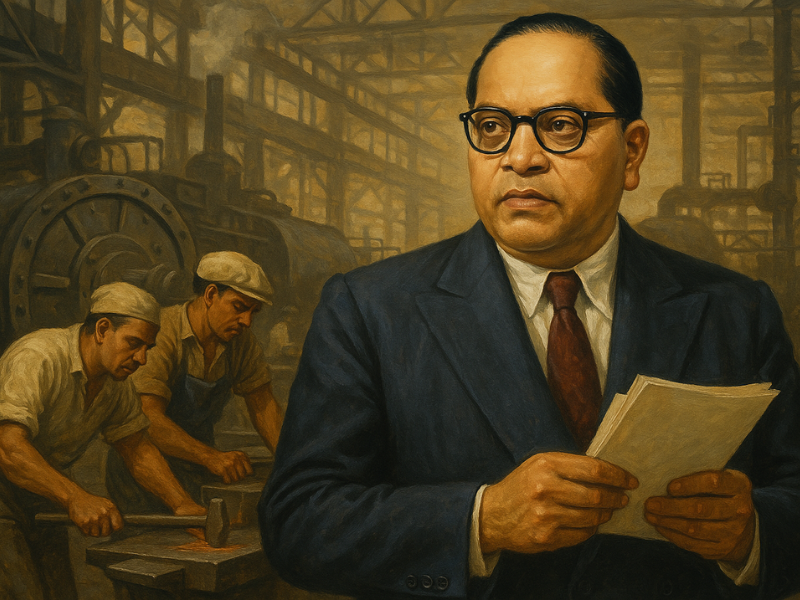
Labor Rights & Factory Acts

Dr. B.R. Ambedkar was one of the earliest champions of workers’ rights in modern India. As Labour Member of the Viceroy’s Executive Council, he introduced significant reforms to improve working conditions, regulate industrial employment, and protect vulnerable labor groups. His work on the Factory Acts, minimum wages, leave benefits, and working hours regulation established the foundation for India’s modern labor laws.

Ambedkar emphasized that economic progress must never come at the cost of workers’ dignity and well-being. His reforms ensured safer workplaces, fair compensation, and legal protection for women, children, and industrial laborers. By strengthening labor rights, Ambedkar sought to create a just industrial system where workers could enjoy security, respect, and opportunities for upward mobility.

Strengthening India’s Economic Foundations

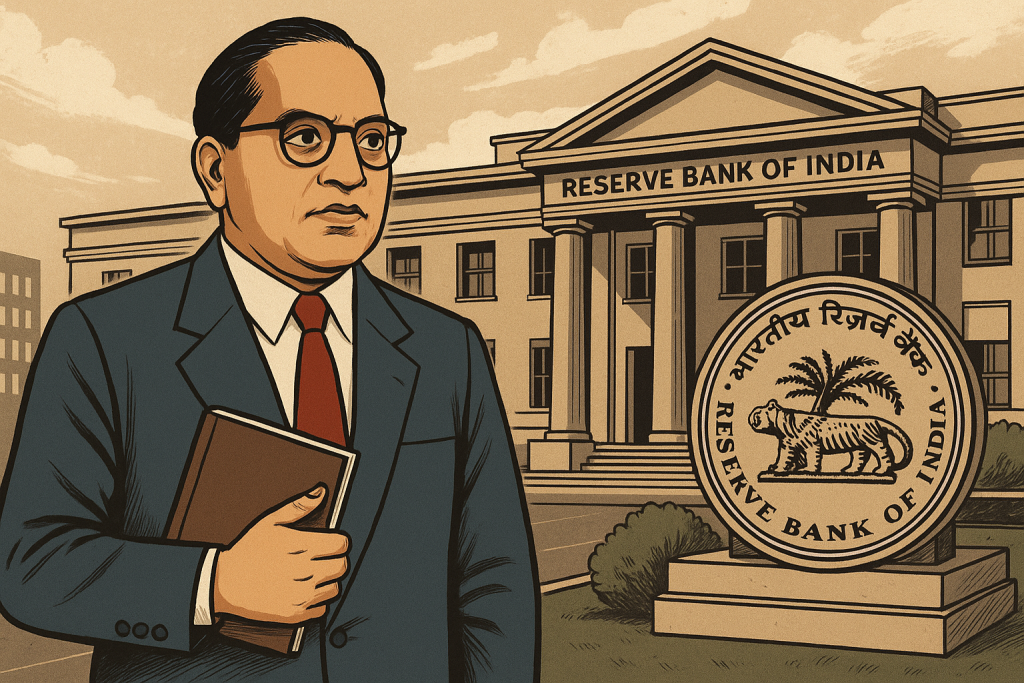
Banking & Finance Reforms

Dr. B.R. Ambedkar played a crucial role in shaping India’s financial architecture through his deep understanding of economics and public finance. His recommendations influenced the creation of the Reserve Bank of India (RBI), based largely on the guidelines he presented in The Problem of the Rupee. Ambedkar emphasized the need for a stable currency, regulated monetary policy, and institutions capable of protecting India from financial instability.

Beyond monetary reforms, Ambedkar advocated for equitable access to credit, fair banking practices, and financial protections for workers, farmers, and marginalized communities. He believed that a strong financial system must empower the weakest sections, not just serve elite interests. His contributions laid the groundwork for inclusive economic policies, ensuring that India’s banking sector supported growth, stability, and social justice.

Building States on Administrative and Cultural Logic

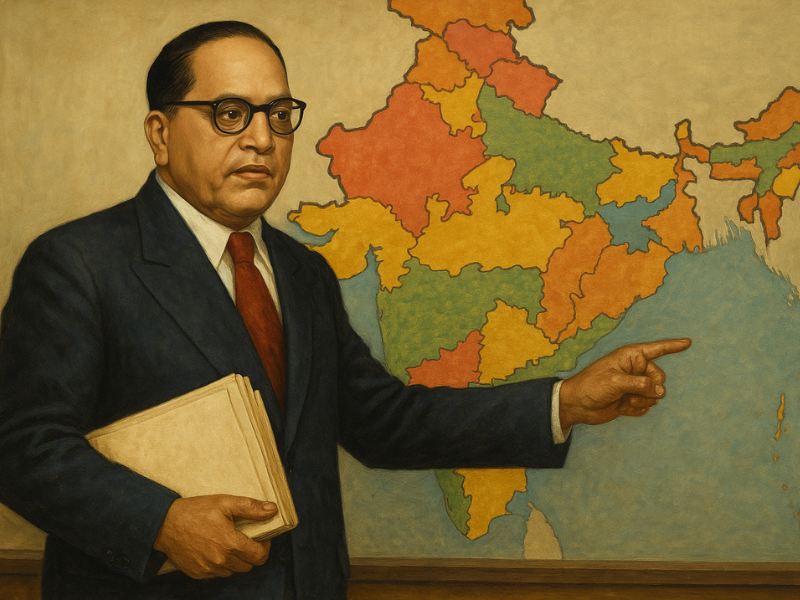
State Reorganization Principles

Dr. B.R. Ambedkar played an influential role in shaping the principles behind the reorganization of Indian states. He argued that states should be reorganized not merely on emotional or linguistic demands, but on administrative efficiency, cultural cohesion, and economic viability. Ambedkar emphasized that the primary goal of reorganization was to create units capable of effective governance, balanced development, and better public administration.

While recognizing the importance of linguistic identity, Ambedkar cautioned that it must be supported by adequate resources, strong administrative structures, and clear boundaries. He believed well-designed states would strengthen democracy by bringing governance closer to the people. His ideas laid the intellectual foundation for the later States Reorganisation Commission, ensuring that India’s federal structure remained stable, functional, and responsive to regional needs.

Creating a Stable, Inclusive, and Accountable Political System

Vision for Democratic Governance

Parliamentary System Preference

Dr. B.R. Ambedkar strongly supported the parliamentary system for India, believing it ensured greater accountability, flexibility, and continuity in governance. He argued that a system where the executive is directly answerable to the legislature prevents authoritarianism and keeps power in check. For Ambedkar, parliamentary democracy was not just a structure—it was a moral commitment to discussion, debate, and responsibility. It allowed citizens to influence government indirectly and ensured that leaders remained sensitive to public needs and social realities.

Federalism & Central Powers Debate

Ambedkar envisioned a federal structure with a strong Centre, capable of maintaining national unity while respecting regional autonomy. He believed states should have significant administrative powers, but the Centre must remain strong enough to address emergencies, uphold constitutional rights, and ensure balanced development. His model of federalism was practical and flexible, designed to prevent fragmentation while promoting cooperative governance. This balanced approach allowed India to function as a diverse yet integrated nation.

Scroll to Top

Bhimrao Ramji Ambedkar played a historic and transformative role as the Chairman of the Drafting Committee of the Constitution of India. In 1947, the Constituent Assembly of India appointed him to lead the committee responsible for preparing the final draft of independent India’s Constitution. His deep knowledge of law, economics, political science, and social justice made him uniquely qualified for this responsibility.

As Chairman, Dr. Ambedkar carefully examined various constitutions around the world and incorporated the most suitable principles into India’s constitutional framework. He worked tirelessly to ensure that the Constitution would guarantee liberty, equality, and justice for every citizen, regardless of caste, religion, gender, or social background. His vision was to create a democratic system that protected fundamental rights while maintaining social harmony and national unity.

One of Dr. Ambedkar’s most significant contributions was the inclusion of Fundamental Rights, which safeguard individual freedoms such as equality before the law, freedom of speech, and protection against discrimination. He also strongly advocated for provisions that abolished untouchability and promoted social equality, ensuring legal protection for historically marginalized communities.

Dr. Ambedkar also helped design the structure of India’s parliamentary democracy, balancing the powers of the legislature, executive, and judiciary. His legal insight ensured that the Constitution would remain flexible enough to adapt to changing times while maintaining strong democratic values.

Throughout the drafting process, Ambedkar demonstrated remarkable dedication, intellectual clarity, and leadership. He addressed debates within the Assembly, clarified complex legal provisions, and guided the committee through countless revisions until the final document was completed.

When the Constitution was adopted on November 26, 1949, Dr. Ambedkar’s work was widely recognized as a monumental achievement. His leadership of the Drafting Committee helped establish the foundation of modern India’s democratic system, ensuring justice, equality, and dignity for all citizens. His contribution remains one of the most significant achievements in India’s constitutional and social history.

Bhimrao Ramji Ambedkar is widely honored as the Architect of Modern India’s Constitution for his remarkable role in shaping the democratic framework of the nation. As the Chairman of the Drafting Committee of the Constitution of India, he led the effort to design a comprehensive legal structure that would guide the newly independent country toward justice, equality, and democratic governance.

After India gained independence in 1947, the Constituent Assembly of India was entrusted with the task of creating a constitution that reflected the aspirations of a diverse nation. Dr. Ambedkar’s deep knowledge of law, economics, and political philosophy made him the ideal leader for drafting this historic document. He carefully studied several international constitutions and thoughtfully adapted their best features to suit India’s social, cultural, and political conditions.

Dr. Ambedkar ensured that the Constitution protected the rights and freedoms of every citizen. One of his greatest contributions was the strong emphasis on Fundamental Rights, which guarantee equality before the law, freedom of speech and expression, and protection against discrimination. He also played a crucial role in abolishing the practice of untouchability, promoting social justice, and creating legal safeguards for marginalized communities.

Another important aspect of Ambedkar’s vision was the establishment of a democratic system based on the rule of law. He helped design a parliamentary structure that balanced the powers of the legislature, executive, and judiciary, ensuring accountability and stability in governance. His approach combined democratic ideals with practical governance mechanisms, allowing the Constitution to remain adaptable to future challenges.

Dr. Ambedkar believed that political democracy must be supported by social and economic equality. Through the Constitution, he sought to create a society where liberty, equality, and fraternity would guide national life.

Because of his intellectual leadership and dedication, Dr. Ambedkar’s contribution to the Constitution remains one of the most important achievements in India’s history, earning him the enduring title Architect of Modern India’s Constitution.

The Fundamental Rights Framework of the Constitution of India forms the cornerstone of India’s democratic system. It guarantees essential freedoms and protections to every citizen, ensuring dignity, equality, and justice in society. These rights were carefully designed to protect individuals from discrimination, injustice, and misuse of power, creating a legal foundation for a fair and inclusive nation.

A major force behind shaping this framework was Bhimrao Ramji Ambedkar, who played a crucial role in drafting the Constitution as Chairman of the Drafting Committee. He believed that true democracy could only exist when citizens were granted strong legal rights that safeguarded their freedom and equality. The Fundamental Rights framework reflects his vision of a society where every individual is respected and protected by law.

The Fundamental Rights are primarily listed in Articles 12 to 35 of the Constitution. These rights include the Right to Equality, which ensures that all citizens are treated equally before the law and prohibits discrimination based on religion, caste, gender, or place of birth. Another key component is the Right to Freedom, which protects liberties such as freedom of speech and expression, peaceful assembly, movement, and profession.

The Constitution also guarantees the Right against Exploitation, which prohibits human trafficking, forced labor, and child labor. The Right to Freedom of Religion ensures that individuals can freely practice, profess, and propagate their faith. Additionally, Cultural and Educational Rights protect the interests of minorities by allowing them to preserve their language, culture, and educational institutions.

One of the most powerful safeguards is the Right to Constitutional Remedies, which allows citizens to approach courts if their fundamental rights are violated. This provision ensures that these rights are not merely symbolic but legally enforceable.

Overall, the Fundamental Rights Framework ensures that democracy in India is not only about governance but also about protecting human dignity, promoting equality, and empowering citizens to live with freedom and justice.